Honeywell RTH221B Installation Manual: A Comprehensive Plan
This comprehensive guide details the Honeywell RTH221B installation process, ensuring a smooth setup and optimal performance of your new thermostat system.
Welcome to the world of smart climate control! The Honeywell RTH221B is a non-programmable thermostat designed for reliable and straightforward temperature management within your home or office. This model offers simple operation, making it an excellent choice for those seeking a user-friendly alternative to more complex programmable thermostats.
This thermostat is compatible with most standard 24V heating and cooling systems, including gas, oil, and electric furnaces, as well as heat pumps. It provides accurate temperature readings and consistent performance, ensuring a comfortable indoor environment. Proper installation, as detailed in this manual, is crucial for optimal functionality and longevity of the device. Congratulations on choosing Honeywell!
Package Contents & Identifying Components
Your Honeywell RTH221B package should include the following items: One RTH221B thermostat unit, one wall plate (mounting base), screws and wall anchors for secure installation, and this comprehensive installation manual. Carefully unpack all components and verify that everything is present before proceeding.
Key components of the thermostat include: The display screen showing current and set temperatures, the temperature control buttons for adjusting settings, and the terminal block for wire connections. The wall plate features clearly labeled terminals corresponding to different HVAC system functions. Familiarize yourself with these components to ensure a smooth and accurate installation process. Retain the packaging for potential future use.
Safety Precautions Before Installation
Prioritize safety during the installation process. Always disconnect power to your HVAC system at the breaker box before beginning any wiring work. This prevents electrical shock and potential damage to your equipment. If you are uncomfortable working with electrical wiring, consult a qualified HVAC technician.
Exercise caution when handling tools and ensure they are in good working condition. Wear appropriate safety glasses to protect your eyes. Avoid installing the thermostat in areas exposed to direct sunlight, extreme temperatures, or moisture. Improper installation can lead to inaccurate temperature readings or system malfunction. Follow all local electrical codes and regulations.
Tools Required for Installation
Successful installation of your Honeywell RTH221B requires a few essential tools. You will need a Phillips head screwdriver for mounting the base plate and securing wiring connections. A small flathead screwdriver can be helpful for terminal block adjustments. Wire strippers are crucial for preparing the thermostat wires, ensuring clean and secure connections.
A level is necessary to ensure the thermostat is mounted straight for accurate readings. A digital multimeter can be useful for verifying power is off and testing wire continuity. Finally, a pencil for marking screw locations and a drill with appropriate bits may be needed depending on your wall material.

Understanding the Thermostat Wiring – A General Overview
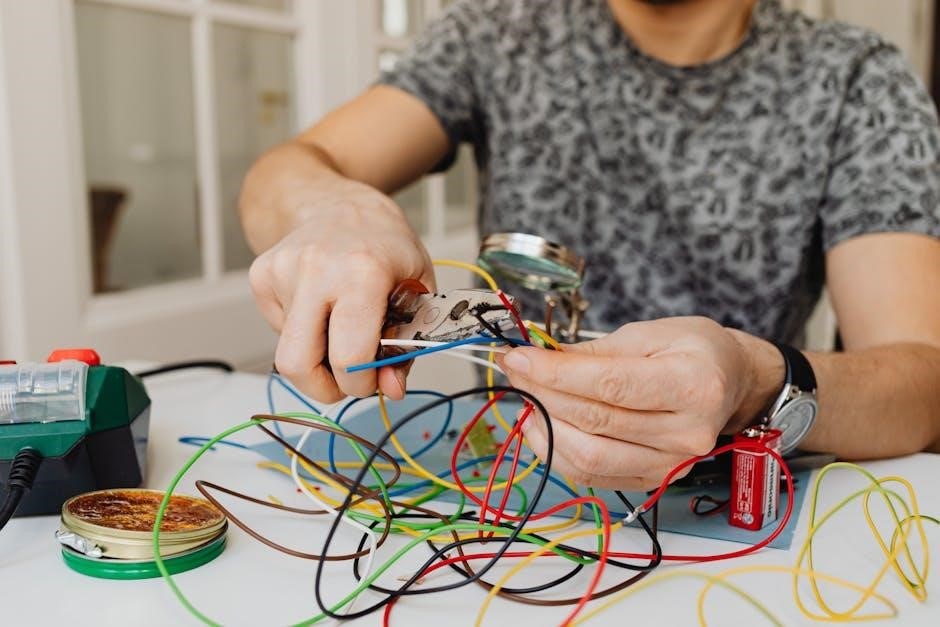
Thermostat wiring utilizes low-voltage circuits to communicate with your HVAC system. Wires are typically color-coded, though variations exist. Common designations include R (power), C (common), W (heat), Y (cool), and G (fan). Understanding these labels is vital for correct installation;
The RTH221B operates on 24V AC power, requiring both R and C wires for consistent operation. Incorrect wiring can damage the thermostat or your HVAC system. Always label wires before disconnecting the old thermostat. A thorough understanding of your existing wiring is paramount before proceeding with the installation process.
Identifying Your HVAC System Type
Accurately identifying your HVAC system is crucial for proper thermostat wiring. The Honeywell RTH221B supports conventional (24V), heat pump, and millivolt systems. Conventional systems utilize a single heating source and a separate cooling source.
Heat pump systems provide both heating and cooling from a single unit, often requiring additional wiring for auxiliary heat. Millivolt systems, commonly found with fireplaces, operate on very low voltage. Determining your system type ensures compatibility and prevents damage during installation. Consult your HVAC system’s documentation or a qualified technician if unsure.
Conventional Systems (24V)
For 24V conventional systems – the most common type – the Honeywell RTH221B typically connects to wires labeled R, C, W, Y, and G; ‘R’ provides power, ‘C’ is the common wire, ‘W’ activates heating, ‘Y’ controls cooling, and ‘G’ operates the fan.
Proper wiring is essential; incorrect connections can damage your HVAC equipment. Always disconnect power before working with wires. Refer to the detailed wiring diagrams provided later in this manual for specific configurations. Ensure wires are securely connected to the terminal blocks on the thermostat base plate.
Heat Pump Systems
Heat pump systems require a slightly different wiring approach than conventional setups. The RTH221B handles heat pumps with auxiliary heat effectively. Common wires include R, C, Y, G, W1, and W2 (or AUX). ‘Y’ controls cooling and reversing valve, ‘G’ manages the fan, ‘W1’ activates the primary heat, and ‘W2’ (or AUX) engages auxiliary/emergency heat.

Carefully identify your heat pump’s wiring configuration before connecting. Incorrect wiring can lead to inefficient operation or damage. Consult the detailed wiring diagrams specifically designed for heat pump systems. Double-check all connections before restoring power to ensure proper functionality and avoid potential issues.
Millivolt Systems
Millivolt systems, commonly found with gas fireplaces, operate differently than standard 24V systems. The RTH221B can be used with these, but requires specific wiring considerations. Typically, you’ll connect wires labeled ‘RH’ (or ‘mV’) for power, and ‘W’ for heat activation. No common (C) wire is usually needed in millivolt setups.
Precise wiring is crucial as millivolt signals are very low voltage. Incorrect connections can prevent the fireplace from lighting or cause intermittent operation. Refer to the dedicated millivolt wiring diagrams for the RTH221B. Always verify the polarity and ensure secure connections for reliable performance.
Detailed Wiring Diagrams for Common HVAC Configurations
Understanding your HVAC system’s wiring is paramount for a successful RTH221B installation. This section provides clear, detailed diagrams for frequently encountered configurations. We cover gas furnaces with forced air, electric furnaces, and heat pump systems with auxiliary heat. Each diagram illustrates the correct terminal connections for each wire – Rh, Rc, W, Y, G, and C.
Carefully compare your existing wiring to these diagrams before making any connections. Incorrect wiring can damage your HVAC equipment or the thermostat itself. If you are unsure about any aspect of the wiring, consult a qualified HVAC technician for assistance. Safety first!
Wiring for Gas Furnace with Forced Air
For a gas furnace with forced air, the typical wiring configuration involves connecting wires to specific terminals on the RTH221B baseplate. The Rh terminal receives 24V power, while Rc is often jumpered to Rh if only one transformer wire exists. The W wire controls the heating function, activating the gas valve and blower. The Y wire energizes the cooling system, engaging the compressor and fan.
The G wire operates the blower fan independently, and a common (C) wire provides a return path for the 24V signal. Always double-check your furnace’s wiring diagram and ensure a secure connection for each wire to prevent malfunctions.
Wiring for Electric Furnace
When wiring an electric furnace with the Honeywell RTH221B, the process shares similarities with gas furnace setups, but key differences exist. The Rh and Rc terminals typically receive 24V power, potentially requiring a jumper if a single transformer wire is present. The W wire activates the electric heating elements within the furnace, initiating the heating cycle. The Y wire controls the cooling function, engaging the compressor and condenser fan.
A common (C) wire is crucial for providing consistent power to the thermostat. Ensure all connections are secure and match your furnace’s wiring diagram to avoid operational issues and potential damage.
Wiring for Heat Pump with Auxiliary Heat
Heat pump systems with auxiliary heat require careful wiring with the Honeywell RTH221B. The Y wire controls the compressor for cooling, while the O/B wire reverses the valve for heating. The auxiliary heat, often electric resistance, is activated by the AUX or E wire when the heat pump can’t meet the heating demand. Rh and Rc terminals manage power, potentially needing a jumper.
Proper identification of the O/B wire’s function (heating or cooling) is vital. A common (C) wire is essential for reliable operation. Double-check all connections against your system’s wiring diagram to ensure correct functionality and prevent damage.
Step-by-Step Installation Guide
Begin by turning off power to your HVAC system at the breaker. Carefully remove your old thermostat, noting the wire connections – a photo is helpful! Mount the RTH221B base plate securely to the wall, ensuring it’s level. Connect the wires to the corresponding terminals on the base plate, referencing the wiring diagram for your specific system.
Once wired, gently push the thermostat body onto the base plate. Restore power at the breaker and follow the on-screen prompts for initial setup. Verify proper operation of both heating and cooling modes.
Removing the Old Thermostat
Before you begin, absolutely turn off the power to your HVAC system at the circuit breaker to avoid electrical shock. Carefully remove the cover of your existing thermostat, exposing the wiring terminals. Take a clear photograph of the existing wiring connections – this is crucial for accurate re-installation.
Label each wire with the corresponding terminal designation before disconnecting them. Gently detach the wires from the old thermostat’s terminals. Remove the old base plate from the wall. Be cautious of any loose screws or wall anchors.

Mounting the RTH221B Base Plate

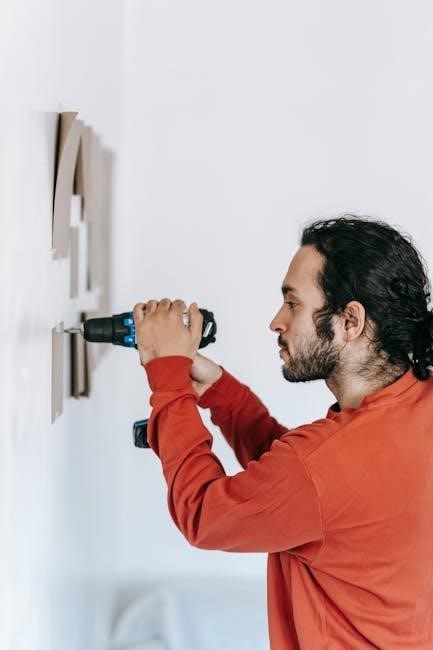
Position the RTH221B base plate on the wall where the old thermostat was located, ensuring it’s level. Use a small level for accuracy. Mark the screw holes with a pencil. If necessary, drill pilot holes for the screws, using appropriate wall anchors if mounting into drywall.
Secure the base plate to the wall using the provided screws. Ensure the base plate is firmly attached and doesn’t wobble. Double-check that the base plate is level before proceeding. Carefully feed the thermostat wires through the opening in the base plate.
Connecting the Wires to the Terminal Blocks
Carefully strip approximately ¼ inch of insulation from the end of each thermostat wire. Insert each wire into the corresponding terminal block on the RTH221B base plate, matching the wire labels to the terminal designations (R, W, Y, G, C, etc.). Ensure each wire is securely fastened within its terminal; a gentle tug confirms a solid connection.
Avoid cross-connecting wires, as this can damage your HVAC system. Double-check all connections against your wiring diagram. If a wire doesn’t fit easily, re-strip the insulation. Securely tighten each terminal screw, but avoid over-tightening.
Powering On and Initial Setup
After securely connecting all wires, restore power to your HVAC system at the breaker. The Honeywell RTH221B should power on automatically. Observe the display; it should illuminate and begin the initial setup sequence. Follow the on-screen prompts to set the current date and time accurately.
Next, the thermostat will guide you through selecting your HVAC system type (furnace, heat pump, etc.). Choose the option that best matches your system. Confirm your zip code for accurate weather information. Complete the setup by configuring your preferred temperature units (Fahrenheit or Celsius).
Programming the Thermostat – Basic Settings
To begin programming, access the thermostat’s menu using the buttons on the faceplate. Select “Schedule” to create a heating and cooling schedule tailored to your lifestyle. You can set different temperatures for Wake, Leave, Return, and Sleep periods. Consider energy savings by lowering temperatures when you’re away or asleep.
Explore the “Temporary Hold” function for short-term temperature adjustments. Utilize the “Permanent Hold” option to maintain a constant temperature indefinitely. Adjust fan settings to “Auto” for on-demand operation or “On” for continuous air circulation. Review and save your settings to activate the programmed schedule.
Troubleshooting Common Installation Issues
If the thermostat displays “No Power,” verify the battery installation and circuit breaker status. For a “Heat Not Responding” error, double-check the wiring connections to the furnace control board. A “Cool Not Responding” message suggests wiring issues with the air conditioning unit. Ensure proper wire placement on the terminal blocks, referencing the wiring diagram.
If the display is blank, replace the batteries. Incorrect temperature readings may indicate a thermostat location exposed to drafts or sunlight. Persistent issues require consulting a qualified HVAC technician. Always prioritize safety and disconnect power before inspecting wiring.
Resetting the Honeywell RTH221B Thermostat
To perform a soft reset, remove the thermostat cover and locate the reset button – typically a small recessed button. Press and hold this button for approximately five seconds, allowing the thermostat to reboot. This process clears temporary settings without affecting permanent programming. For a factory reset, which restores all settings to their original defaults, a different procedure may be required.
Consult the full installation manual for specific factory reset instructions, as these can vary. Be aware that a factory reset will erase all personalized schedules and preferences. After resetting, re-configure the thermostat according to your desired settings.
Battery Replacement and Maintenance
The Honeywell RTH221B thermostat requires regular battery replacements to ensure continuous operation, especially during power outages. Typically, two AA alkaline batteries are used; replace them annually or when the low battery indicator appears on the display. To access the battery compartment, remove the thermostat cover. Ensure proper battery polarity during installation.
For optimal performance, periodically clean the thermostat’s display with a soft, dry cloth. Avoid using liquids or abrasive cleaners. Regularly check the wiring connections to ensure they remain secure. Proper maintenance extends the lifespan and reliability of your thermostat.
Warranty Information and Support Resources
Honeywell provides a one-year limited warranty on the RTH221B thermostat, covering defects in materials and workmanship. This warranty does not cover damage from improper installation, misuse, or neglect. To initiate a warranty claim, retain your proof of purchase and contact Honeywell Customer Care.
For additional support, visit the Honeywell Home website for FAQs, troubleshooting guides, and downloadable resources. You can also reach Honeywell’s technical support team via phone or online chat. Their dedicated professionals are available to assist with installation questions and resolve any issues you may encounter. Explore their extensive online knowledge base.
Frequently Asked Questions (FAQ)
Q: Can the RTH221B control a millivolt system? A: Yes, it is compatible, but requires specific wiring configurations detailed in the manual. Q: What if my wires don’t match the terminal labels? A: Consult a qualified HVAC technician for assistance. Q: Does this thermostat support remote control? A: No, the RTH221B is a non-connected, manual thermostat.
Q: How do I reset the thermostat to factory settings? A: Refer to the “Resetting the Honeywell RTH221B Thermostat” section. Q: What type of batteries does it require? A: It uses two AA alkaline batteries. Q: Is professional installation required? A: While not mandatory, it’s recommended if you’re uncomfortable with electrical wiring.